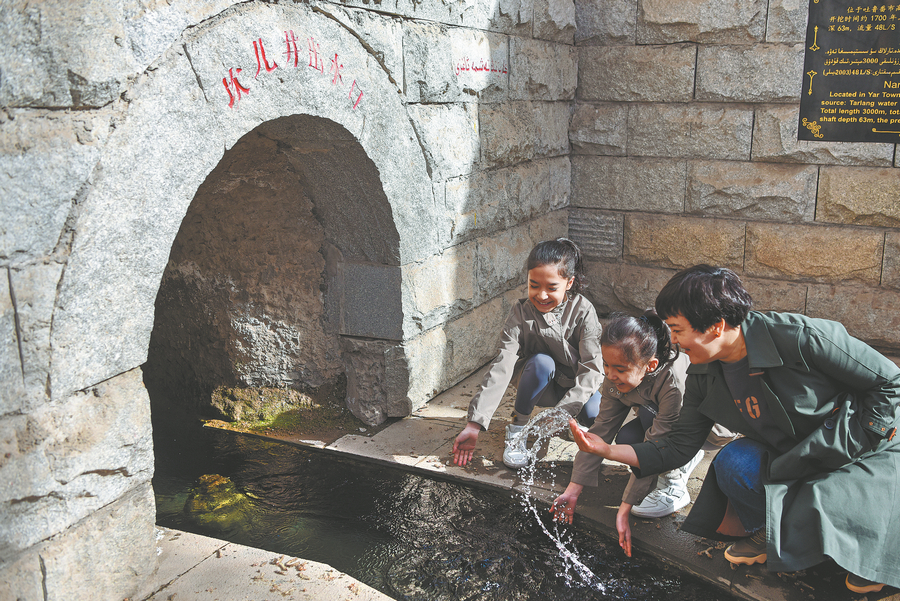
Karez System
Introduction
The Karez system is an ancient irrigation method that has sustained life and agriculture in arid regions for thousands of years. Originating in Turpan, located in the Xinjiang Uygur autonomous region of China, this ingenious water management system is designed to combat the harsh climatic conditions of the area, where annual precipitation averages only 16 millimeters and evaporation rates soar to 3,000 millimeters. The system consists of vertical shafts connected by underground channels that transport water from melted ice and snow in the Tianshan Mountains to the surface, forming ditches and small ponds. This underground structure prevents water loss due to evaporation, ensuring a reliable water supply for drinking and irrigation. Spanning over 5,000 kilometers within Xinjiang, the Karez system is considered one of China's greatest ancient man-made structures, alongside the Great Wall and the Grand Canal. Its significance is reflected in local proverbs, such as "Karez is our life. Without Karez, there would be no Turpan, nor would there be an oasis civilization in Turpan."
History
The origins of the Karez system date back over 2,000 years, showcasing the ingenuity and resourcefulness of ancient civilizations in addressing water scarcity. Developed by the ancestors of the Uygur ethnic group and other communities in Xinjiang, the system has played a pivotal role in transforming the arid Turpan Basin into a thriving oasis. For centuries, the Karez system ensured the nourishment of local inhabitants and supported agricultural activities in one of China's driest and hottest regions. However, the introduction of modern irrigation techniques and the increased use of pumping wells in the 1980s led to a decline in groundwater levels, causing many Karez wells to dry out. Recognizing the importance of this historical irrigation system, the Xinjiang Karez protection regulations were enacted in 2006, and significant investments have been made since 2009 to rescue and preserve the wells. By 2022, 165 wells had been restored in Turpan, revitalizing their water flow and reaffirming their role in sustaining life and agriculture.
Structure and Function
Components of the Karez System
The Karez system is composed of several key components that work harmoniously to transport water from underground sources to the surface. These include:
-
Vertical Shafts: These well-like structures serve as access points for maintenance and facilitate the movement of water through the underground channels. The shafts vary in depth, with some reaching up to 30 meters.
-
Underground Channels: These tunnels connect the vertical shafts and are meticulously designed to follow the natural gradient of the terrain, allowing water to flow using gravity. The channels are often lined with stone to prevent erosion and ensure durability.
-
Surface Outlets: Water from the underground channels emerges at surface outlets, forming ditches and small ponds that distribute water to surrounding areas.
-
Water Sources: The system relies on runoff from melted ice and snow in the Tianshan Mountains, ensuring a consistent supply of water even in the arid climate of Turpan.
Water Distribution Mechanism
The Karez system's water distribution mechanism is a testament to ancient engineering brilliance. Gravity plays a central role in transporting water through the underground channels, minimizing the need for external energy sources. The underground structure prevents water from evaporating, a critical feature in regions with high surface temperatures. Once the water reaches the surface outlets, it is directed into irrigation ditches and ponds, providing a reliable supply for agricultural activities and daily use. This efficient mechanism has sustained life in Turpan for centuries, enabling the cultivation of crops such as grapes, which are a major agricultural product of the region.
Geographic Distribution
While the Karez system is most prominently associated with Turpan, it is not confined to this region alone. Similar systems can be found in other provinces of China, including Gansu, Shaanxi, and Shanxi. Beyond China's borders, Karez systems are present in countries such as Afghanistan, Iran, and Pakistan, highlighting the widespread adoption of this ancient irrigation technique in arid regions across Asia. Turpan remains the heart of the Karez system, with 997 canals spanning a total length of 3,491.74 kilometers, of which 214 are actively transporting water. The system's geographic distribution underscores its adaptability and enduring relevance in diverse environments.
Cultural Significance
The Karez system is not merely an irrigation method; it is a cultural emblem deeply ingrained in the lives of the people of Turpan. Local residents, such as Eskander Kadir, often refer to themselves as "children of Karez wells," emphasizing the system's integral role in their identity and heritage. The taste of Karez water is considered superior to tap water, and it is offered to guests as a symbol of hospitality. The system has inspired local proverbs and sayings, reflecting its importance in sustaining the oasis civilization of Turpan. Additionally, the Karez system has become a focal point for tourism, with scenic spots dedicated to showcasing its structure, function, and historical evolution. Visitors can explore underground channels, marvel at the ancient engineering, and gain a deeper appreciation for the wisdom of past generations.
Modern Challenges and Preservation
Despite its historical significance, the Karez system faces modern challenges, including declining groundwater levels and the pressures of contemporary irrigation practices. Efforts to preserve and protect the system have been ongoing since the enactment of the Xinjiang Karez protection regulations in 2006. Over 100 million yuan has been invested in rescuing and reinforcing more than 200 wells in Xinjiang. Local residents play a crucial role in maintenance, dredging underground channels, and monitoring water levels. These preservation efforts have yielded positive results, with water flow increasing in recent years. The system's revitalization not only supports agricultural activities but also boosts tourism, contributing to the local economy. The Karez system is a "living fossil" that continues to provide vital functions while serving as a symbol of cultural heritage.
Influence on Local Communities and Agriculture
The Karez system has profoundly influenced the lives of local communities and the agricultural landscape of Turpan. It has enabled the cultivation of crops such as grapes, which thrive in the region's unique climate and soil conditions. Farmers rely on Karez water for irrigation, cleaning, and other daily activities, ensuring the sustainability of their livelihoods. The system fosters a sense of unity among residents, who collaborate in its maintenance and protection. Additionally, the cultural and historical value of the Karez system has inspired entrepreneurial ventures, such as homestays and tourism businesses, further integrating it into the social and economic fabric of Turpan. As a cornerstone of life in the region, the Karez system exemplifies the harmony between humanity and nature, reflecting the wisdom and resilience of ancient civilizations.








